What are the differences between PVB and SGP Laminated Glass?
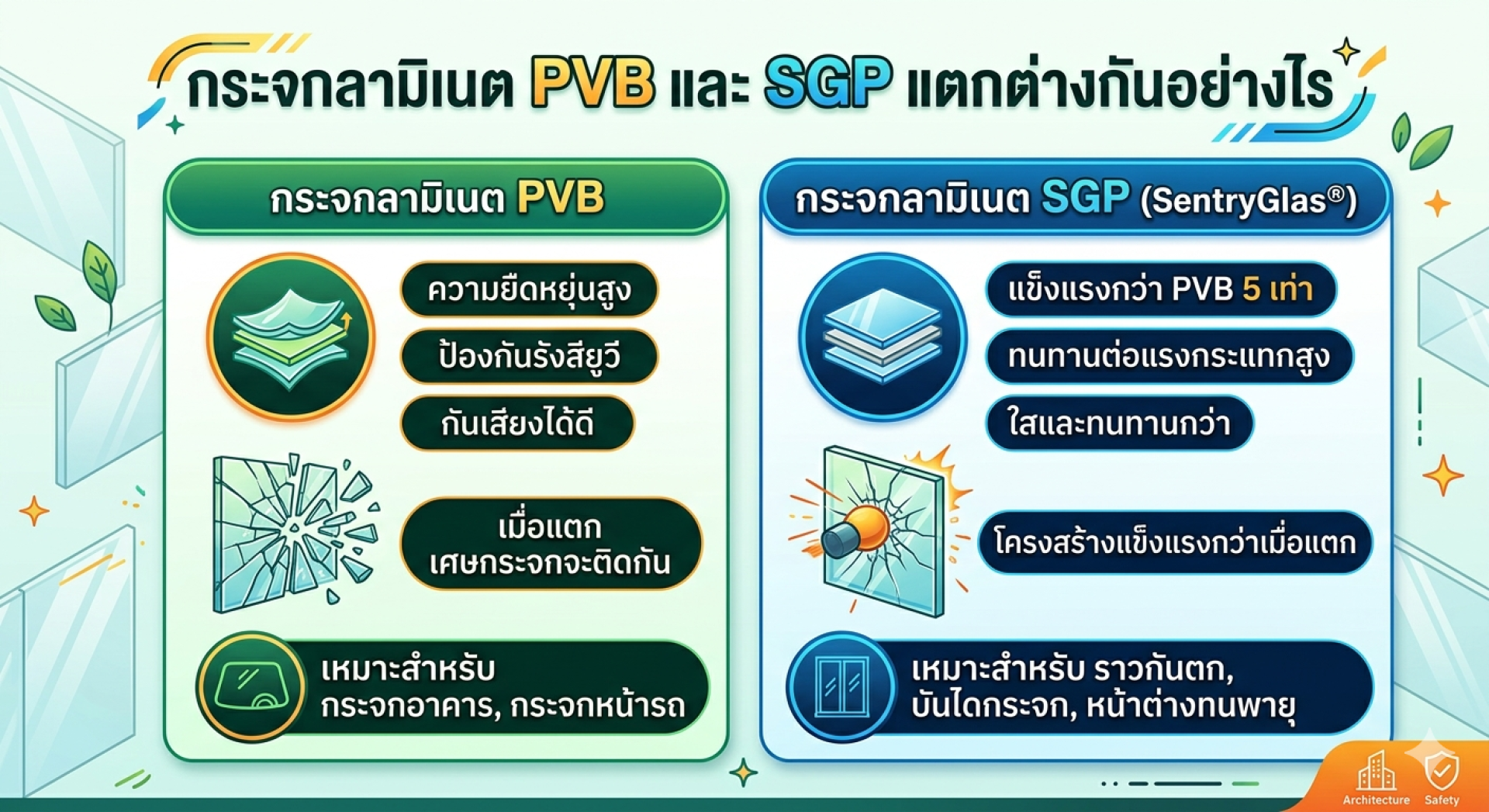
In the fields of architecture and construction engineering, laminated glass plays a vital role in enhancing both the safety and aesthetics of buildings. Specifically, PVB (Polyvinyl Butyral) and SGP (SentryGlas Plus) laminated glass types are widely popular. Both types have distinct characteristics and limitations. This article will provide an understanding and comparison of PVB and SGP laminated glass across various aspects, including material composition, strength, clarity, post-breakage performance, applications, and costs. This will assist architects, engineers, designers, and interested parties in selecting the most suitable and cost-effective material for their investment.
Material Composition of PVB and SGP Laminated Glass
The basic structure of both types of laminated glass is similar: they consist of two or more layers of glass sandwiched together with an interlayer film to increase safety and durability. However, the clear difference between the two lies in the type of interlayer film used.
- PVB (Polyvinyl Butyral) is a highly flexible polymer interlayer made from polyvinyl butyral, which offers good adhesion to glass and helps absorb impact to a certain extent. PVB film typically has a thickness starting at 0.38 mm and is widely used in general laminated glass applications.
- SGP (SentryGlas Plus) is a newly developed Ionoplast interlayer film. It possesses several times the strength and density of PVB film. It typically has a thickness of around 0.76 mm, which is twice that of standard PVB. SGP film is significantly tougher and more resistant to tension and impact, making it ideal for high-stability requirements.
Strength and Durability
When it comes to strength and durability, many may wonder which interlayer better suits their needs in different situations. In reality, these properties depend on the type of film used to laminate the glass.
- PVB Laminated Glass offers standard levels of strength and durability, suitable for general safety applications such as residential windows, office buildings, or areas without high impact risks. PVB film helps keep glass fragments together upon breakage, providing a certain level of safety.
- SGP Laminated Glass is up to 5 times stronger than PVB and significantly more resistant to impact and tension. It is suitable for applications requiring high stability, such as high-rise buildings facing strong winds or high-impact risk areas like impact-resistant glass or skylights in public buildings.
Transparency and Clarity
The transparency and clarity of laminated glass directly affect the aesthetics and long-term usability, which many value as much as strength.
- PVB film provides good transparency initially, but over time, it may experience yellowing or clouding (haze), affecting clarity and making the glass appear aged sooner, especially in environments with high sunlight or humidity.
- SGP film has higher transparency than PVB and is significantly more resistant to discoloration or clouding. This ensures the glass maintains its clarity and beauty over the long term, making it ideal for projects requiring high cleanliness and aesthetic appeal, such as office buildings or shopping malls.
Post-Breakage Performance
When glass breaks, user safety remains a critical factor to consider in detail, as scattered glass fragments can cause serious injury.
- PVB Laminated Glass helps hold glass fragments together when broken, reducing the risk of scattered shards and preventing injuries to a certain degree.
- SGP film is far more effective at holding glass fragments together than PVB. Even when the glass breaks, it retains higher structural stability and safety, providing better protection in cases of high impact or tension.
Applications
The choice between laminated glass types depends on the nature of the application, safety requirements, and the economic feasibility targeted by each project.
- PVB Laminated Glass is suitable for general applications such as windows, office buildings, and residences that require standard safety and good noise reduction.
- SGP Laminated Glass is ideal for high-strength applications such as impact-resistant glass, high-wind pressure glass, skylights, or glass that must bear significant loads in high-rise or public structures.
Cost Considerations
Cost is often a major factor in the decision-making process for laminated glass materials, as budgets vary significantly between projects.
- PVB film is significantly more affordable than SGP, making it an economical choice for applications that do not require extreme strength and for projects with limited budgets.
- SGP film is priced higher than PVB due to its superior properties and durability. It is suited for projects demanding high safety and stability. Despite the higher initial cost, it can reduce risks and increase long-term value.
Summary and Recommendations
When considering the pros and cons of PVB and SGP laminated glass, it is clear that both types have distinct advantages and limitations, summarized as follows:
- PVB Laminated Glass is best for general projects requiring standard safety within a limited budget. It offers good initial transparency and noise reduction but has limitations regarding impact resistance and long-term discoloration.
- SGP Laminated Glass is suited for projects requiring high strength and long-term durability, such as high-rise buildings or areas with strong wind loads and high impact risks. it offers superior transparency, clarity, and post-breakage fragment retention. While more expensive, it provides worthwhile value through enhanced safety and stability.
Imagine a mid-sized office building in an area with moderate wind loads; PVB laminated glass may be the ideal choice as it saves budget while maintaining appropriate safety. Conversely, for a city skyscraper facing high wind loads and impact risks, SGP laminated glass will better enhance long-term stability and safety.
With this comparative information, architects, engineers, and designers can confidently make informed decisions to select the most appropriate laminated glass material for each project with maximum efficiency.
If you are planning to use laminated glass for your project, do not hesitate to consider the specific properties and requirements of your work to ensure you receive a material that meets both safety and long-term value needs.
