Coated Glass and Reflective Glass: Features and Applications You Should Know
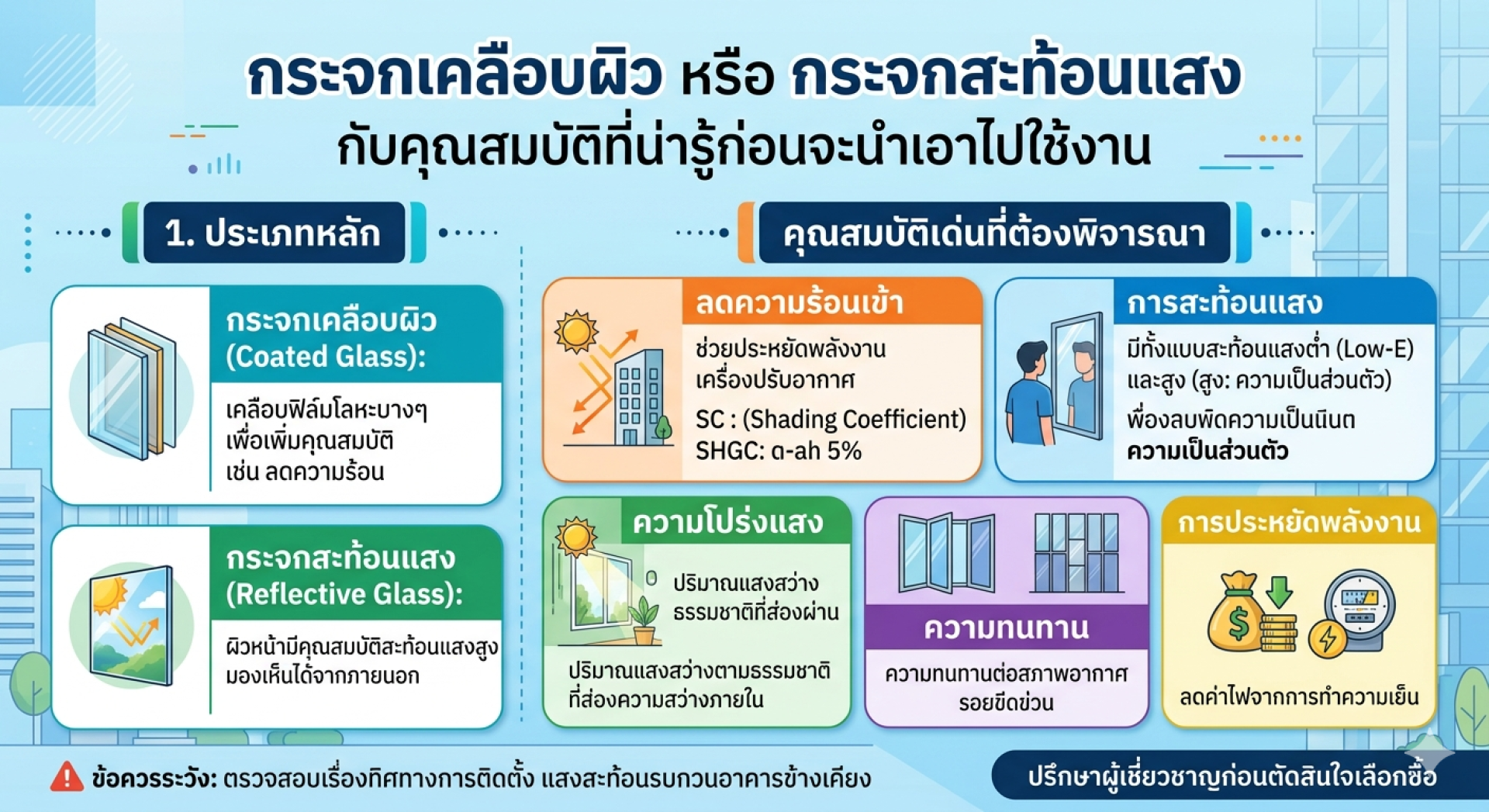
Coated glass, or what many know as reflective glass, is a construction material that plays a vital role in reducing heat and increasing energy-saving efficiency in modern buildings. If you have ever wondered why some buildings remain cool and comfortable even under intense sunlight, the answer may lie in the choice of this type of glass. This article will introduce you to the key properties of coated glass and its main categories, including Solar Reflective Glass and Low-E Glass. It also compares the pros and cons, as well as suitable applications, to help you make the right and most cost-effective decision when choosing coated glass.
Definition and Overview of Coated Glass
Coated glass is glass that has undergone a process of applying a special thin film layer onto its surface to improve its reflection and light-filtering properties. This film layer functions to reduce the amount of solar heat entering the building, minimize annoying glare, and help increase energy efficiency within the building.
You may have noticed that office buildings or houses installed with coated glass often feel cooler on extremely hot days. This is because this type of glass effectively reduces the heat passing through.
Generally, coated glass is divided into two main categories:
1.Solar Reflective Glass: Which focuses on reflecting solar heat radiation away from the building.
2.Low-Emissivity Glass (Low-E Glass): Which helps reduce heat radiation from inside the building to the outside, and reduces heat entering the building during summer.
Both types play a crucial role in controlling indoor temperatures, helping to reduce energy consumption from air conditioning systems, and having a positive impact on the environment in the long term.
Details and Properties of Reflective Glass
Solar reflective glass features a special coating that helps reflect solar heat radiation away, significantly reducing the heat absorption within a building. This property alleviates the workload of air conditioning systems and effectively saves energy.
Imagine an office building in a city with intense sunlight all day long. If solar reflective glass is installed, it will reduce the heat entering the interior, allowing employees to work more comfortably without over-relying on air conditioning.
This type of glass is suitable for buildings located in high-temperature areas or areas with intense sunlight, such as office buildings, hotels, or commercial buildings that need to reduce direct solar heat. Additionally, it helps reduce glare that may disturb the vision of building occupants.
Benefits of solar reflective glass include:
- Effectively reduces heat entering the building, resulting in lower energy costs.
- Reduces glare, increasing comfort within the interior space.
- Protects against ultraviolet (UV) radiation, which is harmful to skin and interior furniture.
However, there are precautions to consider. For instance, some models of solar reflective glass may have high reflectivity that affects the exterior surroundings, and the price of this type of glass is typically higher than regular glass. Furthermore, the selection must balance heat reduction with natural light intake to ensure the interior space does not become too dark.
Low-E Glass Details and Properties
Low-E Glass, or Low-Emissivity Glass, is glass with a surface coating that helps reduce heat radiation from inside the building to the outside during winter, and reduces heat entering the building in summer. This keeps the indoor temperature stable and comfortable throughout the year.
This Low-E coating acts like a thermal shield by reflecting heat back inside during cold weather and blocking external heat during hot weather. As a result, heating and cooling systems work less, leading to significant energy savings and cost reductions.
Low-E glass is suitable for buildings requiring efficient temperature control year-round, such as residential homes, office buildings, or structures in areas with seasonal temperature changes.
Advantages of Low-E glass include:
- Helps reduce heat loss in winter and heat gain in summer.
- Increases indoor comfort by maintaining an optimal temperature.
- Reduces the workload of heating and cooling systems, contributing to energy savings.
Precautions for using Low-E glass include ensuring proper and precise installation to achieve maximum efficiency. Additionally, the price of Low-E glass is typically higher than regular glass and some types of solar reflective glass.
Precautions and Recommendations for Using Coated Glass
To achieve the best results and ensure a worthwhile investment when using coated glass, the following precautions and recommendations should be considered:
- Choose the appropriate type of glass for the climate and building usage. For instance, buildings in extremely hot areas should opt for solar reflective glass to reduce direct solar heat gain. However, if year-round temperature control is required, Low-E (Low Emissivity) glass is more suitable.
- Installation should be carried out by experts to prevent leakage issues or a reduction in the glass's efficiency.
- Consider the balance between natural light intake and heat reduction to ensure interior spaces are adequately bright without becoming excessively hot.
- Check technical specifications, such as Visible Light Transmittance (VLT), which indicates the amount of light passing through the glass; Reflectance; and Solar Heat Gain Coefficient (SHGC), to select the glass that best meets your needs.
- Consider the budget and return on investment. Coated glass is more expensive than regular glass but helps save energy costs in the long run.
Summary and Recommendations for Selecting Various Glass Types
Coated glass is a construction material that significantly enhances energy efficiency and indoor comfort. Solar reflective glass is ideal for reducing direct heat from the sun in high-temperature areas with intense sunlight, while Low-E glass is suitable for year-round indoor temperature control in regions with distinct temperature fluctuations.
The selection of coated glass should be based on climate, building characteristics, and budget to achieve maximum efficiency and investment value. Furthermore, installation should be performed by experts to ensure the best results.
With this knowledge and information, you can apply it to selecting and installing the right coated glass for your building's needs. This promotes energy savings and enhances long-term living or working comfort. Understanding the properties and applications of coated glass is the key to planning and designing buildings that meet both aesthetic and energy sustainability goals for the future.
For more information on selecting energy-saving construction materials, you can visit the website of the Thai Construction Industries Association (http://www.tcia.or.th), which provides reliable data and advice. Additionally, studying case studies of buildings that effectively use coated glass—such as office buildings that have successfully reduced energy costs—will provide a clearer picture for practical application.
If you are interested in building energy efficiency and modern construction materials, be sure to follow other articles related to construction technology and energy-efficient building design to enhance your knowledge and choose the materials that best fit your needs.
